 AlpacaKeep
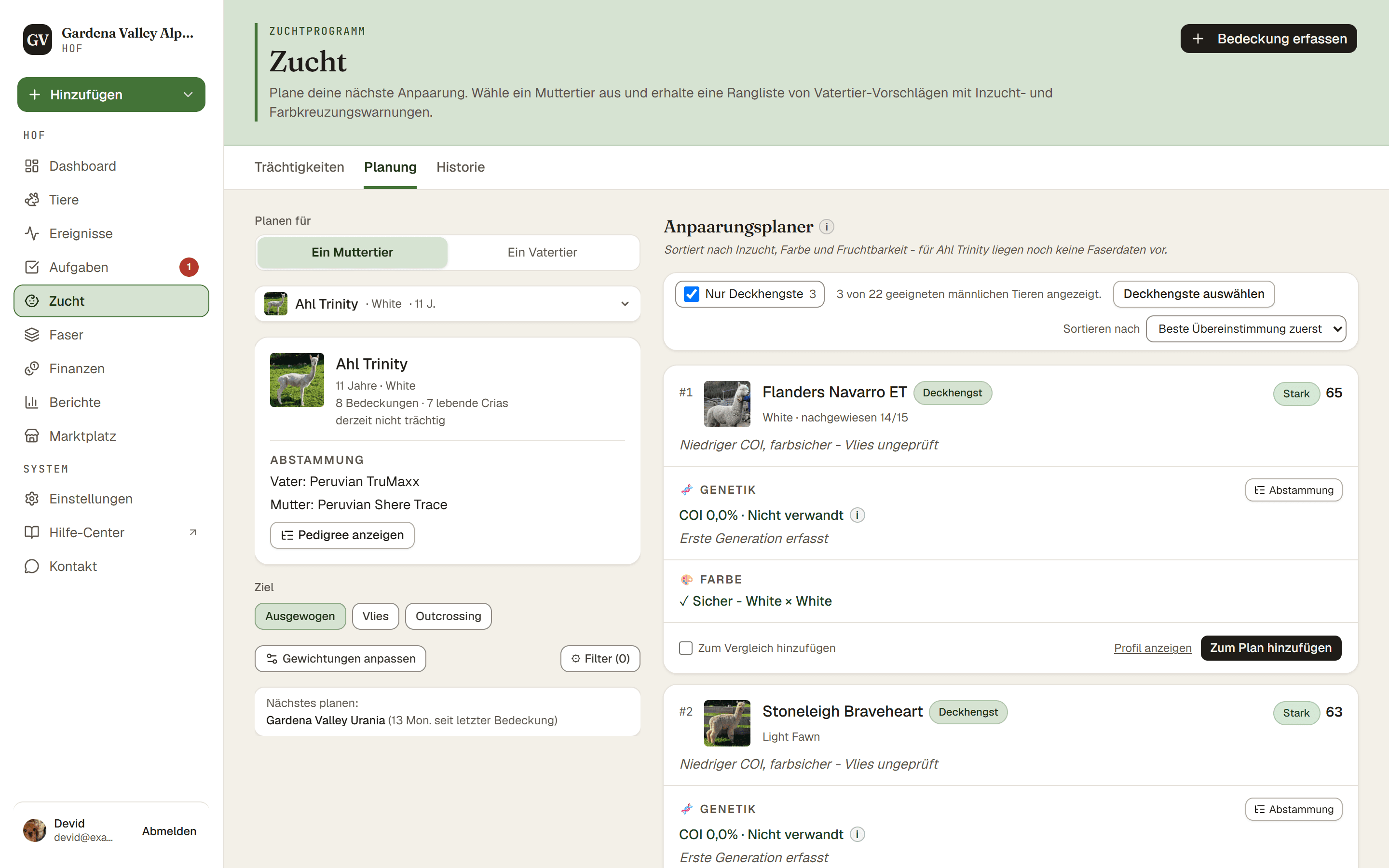
Inzucht ist einfach ein Maß dafür, wie eng zwei Tiere verwandt sind. AlpacaKeep zeigt sie als Prozentwert namens COI, kurz für Inzuchtkoeffizient. 0 % bedeutet, dass das Paar keine gemeinsamen jüngeren Vorfahren hat. Je höher die Zahl, desto mehr Vorfahren teilen sie, so wie Cousins, die dieselben Großeltern haben.
So liest du die Zahl
Der COI betrachtet die Stammbäume beider Tiere und zählt, wie stark sie sich überschneiden. Eine Anpaarung zweier nicht verwandter Tiere liegt nahe bei 0 %. Eine Anpaarung, bei der die Eltern nahe Verwandte teilen, liegt höher. AlpacaKeep sortiert das Ergebnis in vier Stufen mit eigenen Farben:
Zum Beispiel: Die Anpaarung zweier Tiere, die einen Großelternteil teilen, landet bei etwa 3 %, also Sicher. Die Anpaarung von Halbgeschwistern landet bei etwa 12,5 %, also Engverwandtenpaarung.
Gut zu wissen. AlpacaKeep verfolgt den Stammbaum so tief, wie es die Stammbaumtiefe deines Hofs erlaubt (unter Einstellungen → Hofprofil), sodass ein tieferer Baum eine vollständigere Zahl ergibt.
Wo du ihn siehst
- Auf den Karten des Anpaarungsplaners, wenn du unter Zucht im Tab Planung eine Anpaarung planst.
- Als Badge auf der öffentlichen Verkaufsseite eines Tieres, wenn beide Elternteile verknüpfte Tiere deines Hofs sind. Dort steht niedrig, moderat oder bedenklich, mit denselben Grenzen von 6,25 % und 12,5 %.
Ein höherer COI ist nicht automatisch schlecht. Manche Züchter setzen bewusst leichte Linienzucht ein. Er bedeutet nur, dass du die Verwandtschaft kennen solltest, bevor du anpaarst. Zur züchterischen Seite, warum das wichtig ist und wie du damit umgehst, siehe den Zuchtratgeber.