 AlpacaKeep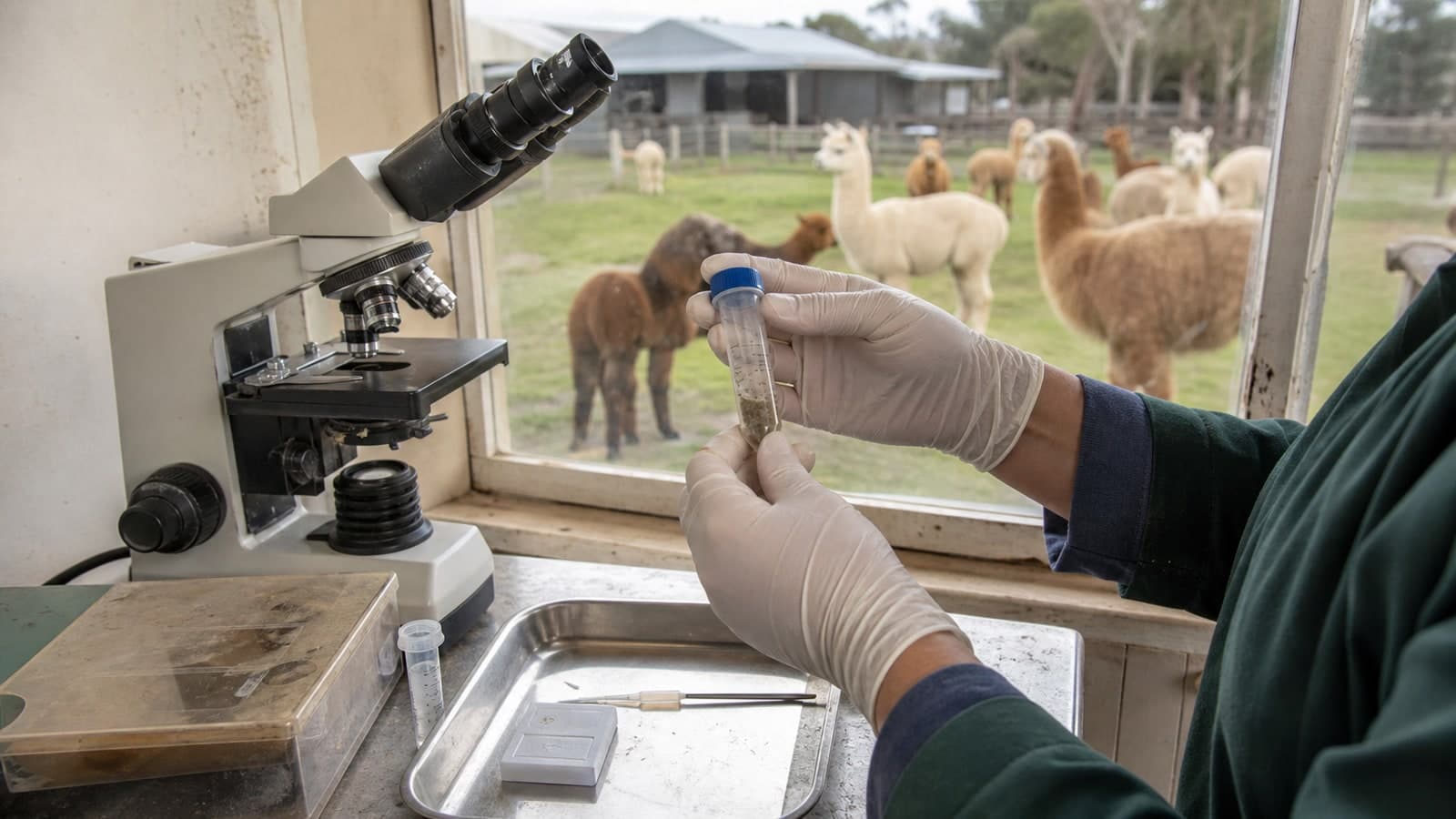
Routine calendar-based whole-herd deworming can select for resistant parasites. [4] A safer programme combines fecal testing, accurate weights, body-condition trends, local parasite risk, and veterinary advice. Visual signs alone can appear late, so the goal is to identify changes early without turning any single number into a diagnosis. Here is how to make those decisions more consistently.
1. Move Beyond Routine Whole-Herd Treatment
Repeated calendar dosing across the whole herd increases selection pressure for drug-resistant parasites. [7] Targeted treatment can preserve a susceptible parasite population and help slow resistance.
The Anchor Rule: Avoid routine whole-herd deworming unless your veterinarian has identified a specific reason for it. The animals needing treatment, and the proportion left untreated, will vary by farm and by outbreak.
Use fecal testing, clinical condition, treatment-response testing, and local parasite risk to decide which animals need treatment. Leaving suitable animals untreated maintains "refugia": a population of susceptible worms that helps slow the spread of drug-resistant genetics. [3]
2. Why Diarrhea Alone Is a Late Signal
Diarrhea should not be the only signal used to investigate parasites. Alpacas evolved in the arid high Andes, and their lower gastrointestinal tract reabsorbs water efficiently.
By the time watery or malformed stool appears, intestinal disease may already be significant. [5]
Earlier clues can include subclinical weight loss and flattening growth curves. [5] Track Average Daily Gain (ADG) on a consistent scale and regularly assess muscle and fat reserves using the Alpaca Body Condition Score Calculator.
3. Using ADG as an Early Prompt
Growth rates vary with age, nutrition, genetics, and conditions. A field study in the Peruvian Andes reported an average daily gain of about 0.17 kg/day (170 g) during the first 12 weeks under its study conditions. [1] Treat that figure as context, not a universal target.
If a cria's growth rate drops unexpectedly, including below roughly 0.14 kg/day (140 g) in conditions comparable to the cited study, collect a fecal sample and contact your veterinarian. [1] The trend matters more than any isolated measurement.
4. Eimeria macusaniensis: Why a Negative Early Test Does Not Rule It Out
Eimeria macusaniensis (often shortened to E. mac) can cause severe intestinal disease in camelids, and affected animals may become ill before routine fecal testing detects oocysts. [8] Falling weight gain, lethargy, poor appetite, diarrhea, or abdominal discomfort in a cria therefore needs prompt veterinary assessment even when an early fecal result is negative.
A negative result does not confirm E. mac, because several parasitic, infectious, and nutritional problems can produce similar signs. Your veterinarian may recommend repeat testing, a more sensitive test, or treatment based on the animal's condition and local risk.
No coccidiosis drug is licensed specifically for camelids, so product choice, dose, route, duration, and withdrawal period must come from your veterinarian. The llama pharmacokinetic study cited below measured ponazuril after one dose, but did not establish an effective treatment regimen for E. mac in alpacas. [9] Record the prescribed protocol and the animal's response rather than relying on a universal schedule.
5. Nematodirus and the Spring Hatch
In cooler, temperate climates, Nematodirus can be an important spring risk. Its larvae develop inside the egg on pasture, often survive winter, and may hatch in large numbers as the soil warms while crias begin to graze. [10] Once swallowed, the larvae take roughly 18 to 21 days to mature into egg-laying adults (the pre-patent period). [10]
Because Nematodirus larvae can damage the small intestine before eggs appear in a fecal test, a low or negative count does not rule it out in a symptomatic cria. Use regional risk information and seek veterinary assessment promptly rather than treating on an egg count alone. [11]
6. Fecal Egg Count (FEC) Action Thresholds
A simple direct fecal smear provides limited information because it is not a quantitative measure of burden. [6] Ask your veterinarian which quantitative flotation method is appropriate and interpret its Eggs Per Gram (EPG) result with the animal's history and condition. [12]
The principle: account for age and immunity. Crias generally have less acquired immunity than healthy adults, so age, growth, body condition, anemia, and local risk all belong in the treatment decision. Suitable untreated animals can contribute to refugia and help preserve drug effectiveness.
Guideline thresholds for intervention (strongyle-type eggs):
- Crias (< 1 year old): treat at a lower count, roughly 100-200 EPG, and sooner if the cria is also losing weight. [2]
- Adult Alpacas: tolerate a higher count before treating, often 300-500+ EPG in a thriving animal. [2]
- A note on the numbers: camelid EPG cut-offs are not standardized, and published figures vary widely by lab method, region, and species. Treat these as starting points, set farm-specific thresholds with your vet, and always read the count alongside clinical signs (weight, BCS, anemia/FAMACHA). Younger or less immune animals may need earlier intervention than healthy adults.
- The efficacy check (FECRT): The American Association of Small Ruminant Practitioners (AASRP) and WAAVP recommend re-testing the same treated animals 10 to 14 days after dosing. [3] A reduction below the expected range can suggest reduced efficacy, but it does not prove resistance on its own. Review dose, administration, sampling, timing, and possible reinfection with your veterinarian before changing drug class. [3]
Stop Doing the Math By Hand
Consistent records make weekly weights, rolling averages, fecal results, and follow-up checks easier to review.
For the small breeder: Paper records can work, but comparing trends across dates and animals takes time and is easy to postpone.
For the commercial operation: As the herd grows, a shared timeline helps staff find current weights, treatments, and follow-up results without reconciling several spreadsheets.
That is why we built AlpacaKeep: to keep each animal's weights, fecal results, treatments, and follow-up efficacy checks in one timeline, so changes are easier to spot and discuss with your veterinarian.
AlpacaKeep is built and run on a working alpaca farm and is in private beta now for farms in the EU, the UK, Australia and New Zealand, with every feature free for the beta farms. The Free plan for up to 10 animals stays free afterwards. Get early access. Our free record-keeping templates are yours to download too, with no signup.
Sources & Further Reading
- [1] Veterinary Field Studies (ResearchGate): Impact of cria protection strategy on post-natal survival and growth
- [2] Inca Alpaca: Fecal Egg Count Treatment Thresholds for Alpacas
- [3] American Association of Small Ruminant Practitioners (AASRP): Anthelmintic Resistance Guidelines & Refugia
- [4] Merck Veterinary Manual: Anthelmintic Resistance and Refugia Management
- [5] Mid-America Alpaca Foundation: Parasite Control and Early Detection of Subclinical Weight Loss
- [6] WormX: Fecal Egg Counts and FECRT Testing Protocols
- [7] Sustainable Control of Parasites (SCOPS): The 80/20 Rule for Refugia and Selective Treatment
- [8] Cebra CK et al. (2007). Eimeria macusaniensis infection in 15 llamas and 34 alpacas. Journal of the American Veterinary Medical Association 230(1):94-100. PMID 17199499.
- [9] Prado ME, Ryman JT, Boileau MJ, Martin-Jimenez T, Meibohm B. (2011). Pharmacokinetics of ponazuril after oral administration to healthy llamas (Lama glama). American Journal of Veterinary Research 72(10):1386-1389.
- [10] Merck Veterinary Manual: Gastrointestinal Parasites of Ruminants and Nematodirus Lifecycle
- [11] UK Alpaca Vet: Nematodirus Spring Hatching Forecast and Risk Assessment
- [12] University of Guelph Animal Health Laboratory: Quantitative Double-Centrifugation Fecal Flotation
- [13] Merck Veterinary Manual: Herd Health of Llamas and Alpacas
- [14] Merck Veterinary Manual: Selected Drugs Used in Llamas and Alpacas