 AlpacaKeep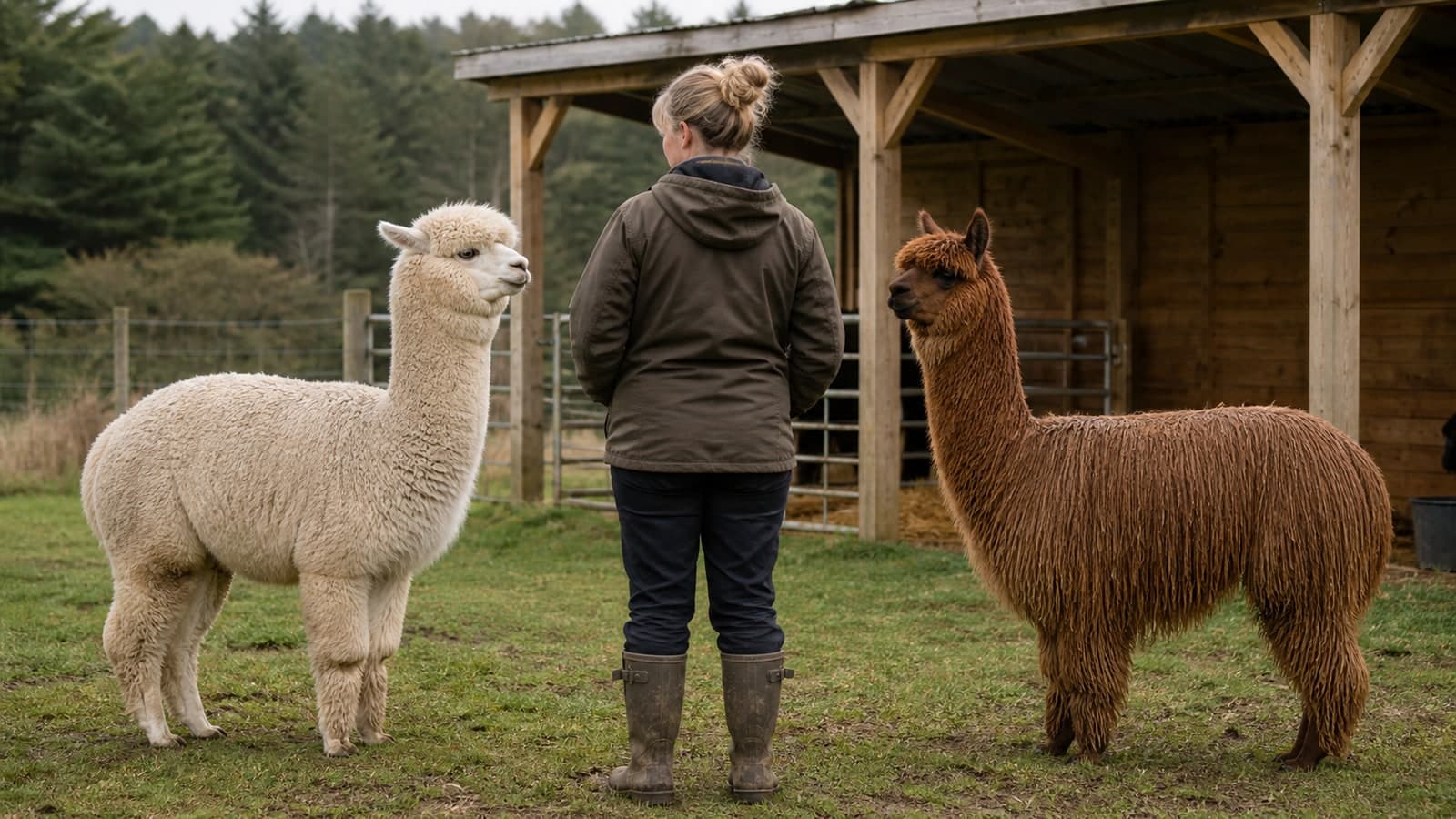
Thinking about starting your own alpaca farm? You aren't alone. Raising alpacas has become an incredibly popular pursuit for both hobby farmers and commercial investors alike.
Alpacas are amazing animals: they have a relatively low environmental impact, they're a manageable size, and they produce a world-class luxury fiber. However, if you're used to traditional livestock like cattle or sheep, camelids (the animal family alpacas belong to) are a completely different ballgame. They have unique needs and require specific care.
If you're just starting out, the choices you make on day one will set the tone for your entire farming journey. The biggest decision you'll face is figuring out the best alpaca breed for beginners.
In this guide, we'll break down the differences between the two main alpaca breeds, the Huacaya and the Suri, and compare their fleece, care needs, and hardiness. We'll also cover the absolute basics you need to know before bringing your first starter herd home.
Whether you're starting a small hobby farm or laying the groundwork to eventually use professional software like AlpacaKeep to manage a commercial herd, mastering these basics is your first step to success.
One thing to settle first: alpacas and llamas are different animals, not two names for the same one. If you are still choosing between them, our alpaca vs llama guide compares size, ears, fleece and temperament side by side. This guide assumes you have picked alpacas.
Which is the Best Alpaca Breed for Beginners: Huacaya vs. Suri?
Once you've decided an alpaca is definitely the right animal for you, it's time to pick a breed: the Huacaya (pronounced wuh-kai-ya) or the Suri.
Both breeds share the same basic physiological and dietary needs, but their fleece is completely different. This drastically impacts how you care for them, especially during extreme weather.
The Huacaya Alpaca
You will immediately recognize a Huacaya by its dense, fluffy fleece that grows straight outward from the skin, giving the animal a rounded, "teddy bear" look.
If you look closely at Huacaya fiber, you'll notice it has a natural "crimp" (a regular zig-zag pattern). This crimp acts like a mechanical spring, giving the fleece a wonderful bounce. More importantly, this structure traps microscopic pockets of air against the animal's body, providing incredible thermal insulation. Huacaya fiber is perfect for spinning into yarn for warm, cozy sweaters and blankets.
The Suri Alpaca
The Suri alpaca is much rarer and is prized by high-end fashion markets for its elegant, dramatic look. Instead of being fluffy, a Suri's fleece cascades vertically down its body in long, lustrous locks that look like dreadlocks.
Suri fiber is completely straight and lacks the crimp found in Huacaya fleece. Because the individual hair strands are so smooth, the fiber has an unparalleled natural sheen and a silken texture that rivals the finest cashmere.
However, this luxurious texture comes with challenges. Suri yarn is famously difficult to spin because the smooth fibers don't grip each other well, meaning mills often have to blend it with sheep's wool or Huacaya fiber just to hold the yarn together.
Fiber Care and Shearing Essentials
The main reason to keep alpacas is to harvest their incredible fleece. Alpaca fiber is naturally water-resistant, flame-retardant, and completely free of lanolin (the natural grease found in sheep's wool), making it hypoallergenic and perfect for sensitive skin.
The "Baby Alpaca" Myth
You've probably seen expensive clothing labeled as "Baby Alpaca" and assumed it was shorn from an actual baby. In reality, "Baby Alpaca" is just an industry term for ultra-fine fiber (usually measuring up to about 22.5 microns). While young alpacas do produce incredibly soft fiber, elite adult alpacas can maintain "Baby Alpaca" fineness their entire lives!
Shearing is Not Optional
If you take away one thing from this guide, let it be this: alpacas need shearing every year. In Switzerland this is written into law: Swiss animal welfare rules require llamas and alpacas to be shorn according to their hair growth and condition. In Germany, Austria, Italy and England we found no such law, but veterinary sources still treat yearly shearing as necessary: an Austrian handbook written with vets from the University of Veterinary Medicine Vienna says alpacas must be shorn every year to avoid serious heat stress in summer.
Alpacas cannot shed their heavily insulating fleece, so an alpaca you don't shear goes into summer in full fleece. Unshorn camelids are more prone to heat stress (Norton et al., 2014), which the Merck Veterinary Manual describes as an emergency that can end in death.
Additionally, a huge, overgrown coat can hide serious medical issues. An alpaca could become dangerously thin or suffer from a severe skin infection, and under a full fleece that can be hard to notice.
Preparing the Fleece (Skirting)
After shearing, the fleece must be "skirted." This means spreading it out on a slatted table and picking out the coarse guard hairs, dirt, and bits of hay or burrs.
Here is where the two breeds differ greatly: the fluffy Huacaya fleece is relatively forgiving and easy for beginners to clean. Suri fleece, on the other hand, acts like a magnet for field debris and is highly prone to severe matting and tangling, making it much more labor-intensive to prepare for the mill.
Weather and Climate Hardiness
Because they evolved in the harsh Andes Mountains, alpacas have highly specialized ways of dealing with the weather.
Beating the Summer Heat
Both breeds can suffer in hot, humid weather: heat stress is common where temperature and humidity are both high (Norton et al., 2014). Alpacas do have sweat glands, concentrated on the belly, in the armpits and on the inner thighs, but in humid heat sweating and breathing may not be enough to cool an animal in full fleece. Have the herd shorn before the summer heat, and give them shade, a well-ventilated shelter and fresh water at all times. The Merck Veterinary Manual lists fans and shade among the things that help. For the signs of heat stress and what to do, see our guide to alpacas in hot weather.
The Dangers of Winter for Suris
While both breeds handle cold weather fairly well, their fleece protects them differently in winter.
The Huacaya's fluffy, crimped fleece stands out from the body and may hold a layer of air that helps keep body heat in when the wind is cold.
The Suri alpaca's fleece, however, works differently in the cold. Their fleece hangs straight down in locks, so it may hold less air against the body, and strong wind can part it along the back. If you live where winters are harsh, plan a draft-free shelter and deep, dry bedding for Suris.
Building Your Starter Herd
The single biggest mistake a new alpaca owner can make is buying the wrong combination of animals for their first herd.
The "Rule of Three"
Alpacas are deeply social herd animals, so plan from the start for a group, not a single animal.
We recommend keeping at least three alpacas together. We advise against buying just one, and two leaves little margin: if one dies, the other is suddenly alone.
The Best Setup for Beginners
If you are just starting out, do yourself a massive favor: do not start with a breeding herd. The dynamics of intact male studs and pregnant females are highly complex, aggressive, and expensive to manage.
The route we recommend for a novice farmer is to buy a cohesive, same-sex group of at least three castrated males (called geldings) or older, retired females.
In our view, geldings are the easiest entry point into alpaca farming. Without the hormones of breeding males, geldings tend to be calmer and easier for beginners to handle during routines like shearing or toenail trimming. Once you've picked a breed, our guide on setting up your first alpaca farm walks through land, fencing, and the first-year plan.
Note: Keep males and females in separate pastures, even if the males are castrated, because geldings may still try to mate.
The Verdict: What is the Best Alpaca Breed for Beginners?
When you factor in daily care, ease of fleece management, and climate hardiness, we recommend the Huacaya alpaca for most beginners.
Healthy, affordable Huacayas are a good fit for a starter herd. Their fluffy, elastic fleece is incredibly forgiving for a novice to handle during the annual shearing process, and it may protect them better in cold, windy winters.
While the Suri alpaca produces an exquisite, highly valued luxury fiber, their strict requirements for complex winter shelters and their high-maintenance, tangle-prone fleece present a steep learning curve that can quickly overwhelm a first-time owner.
Regardless of which breed you choose, our advice stays the same: start with at least three same-sex animals, ideally docile geldings, to ensure your first experience with these amazing animals is a success.
Start Managing Your Herd Like a Pro
Once you bring your first herd home, tracking their health, shearing schedules, and expenses is critical. Spreadsheets and whiteboards quickly become overwhelming as your farm grows.
That's why AlpacaKeep is a dedicated platform made for the particular demands of camelid farming: it streamlines your daily chores, tracks your farm's finances, and helps your first herd grow into a thriving farm.
AlpacaKeep is alpaca herd management software, built and run on a working alpaca farm and in private beta now for farms in the EU, the UK, Australia and New Zealand, with every feature free for the beta farms. The Free plan for up to 10 animals stays free afterwards. Get early access.
Sources & Further Reading
- Norton PL et al. (2014). Camelid heat stress: 15 cases (2003-2011). Canadian Veterinary Journal 55(10), 992 to 996.
- Wiedner E. Merck Veterinary Manual: Diseases of Llamas and Alpacas (heat stress section).
- LFI Österreich. Neuweltkamele: Alpakas und Lamas in Österreich (2020).
- Switzerland: Verordnung des BLV über die Haltung von Nutztieren und Haustieren (SR 455.110.1), Art. 31 Abs. 3.