 AlpacaKeep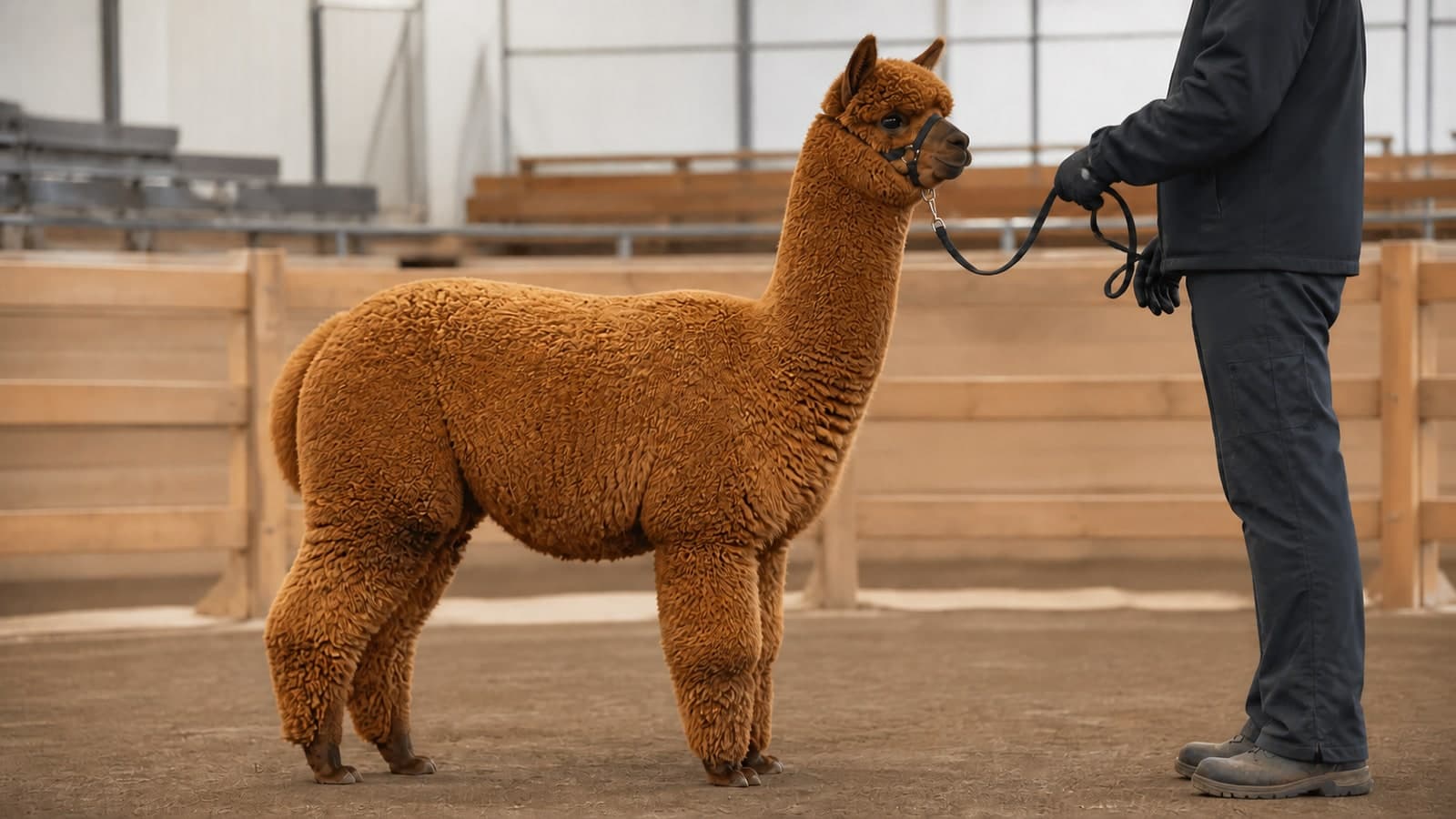
While a standard companion alpaca might cost just a few hundred dollars, the elite tier of the alpaca market operates on an entirely different economic plane. Driven by fractional syndication, tax advantages, and the pursuit of perfect luxury fiber, the high-end market has seen individual animals sell for more than the cost of a luxury home.
(Note: If you are looking for standard pricing tiers and maintenance overhead, read our practical Alpaca Cost & Pricing Guide, or see whether alpacas are actually profitable.)
This is a deep dive into the most expensive alpacas in history, the economics of stud syndication, and how the market recovered from a historic speculative bubble.
The Most Expensive Alpacas Ever Sold
The absolute ceiling of the alpaca market is defined by foundation herdsires that possess flawless conformation, undefeated show records, and unparalleled genetic prepotency. The highest confirmed public auction price is $675,000, while private treaty syndications have valued single animals at $1.5 million.
The historic benchmark for the industry was established in February 2010, when Snowmass Matrix became the most expensive alpaca ever sold at public auction, achieving a verified hammer price of $675,000. He went on to produce more than 400 registered offspring, fundamentally transforming the North American genetic landscape.
However, the highest total market capitalization for a single animal belongs to 4Peruvian Legacy 6016. In 2005, a one-half fractional interest (50% ownership) in this sire was sold via private treaty for $750,000, establishing a total biological valuation of $1.5 million.
Other significant historic sales include:
- Snowmass Invincible: Sold for $580,000 (2005)
- Snowmass Legacy Gold: Sold for $500,000 (2006, "Making of Champions" Private Selection Sale)
- EP Cambridge Invictus: Sold for $175,000 AUD - the highest verified sale in the Australian market; a National Supreme Champion, purchased by a New Zealand breeder via private treaty
- Banksia Park Khan ET: Sold for $170,000 AUD at the 2005 AAA National Auction in Bendigo - the first high-profile Embryo Transfer male to set an Australian national price record
Why Are Alpacas So Expensive at the Elite Level?
Elite alpacas command astronomical prices due to a strict limitation on available genetics, their ability to produce superfine luxury fiber across generations, and highly lucrative federal tax advantages.
An artificial supply constraint was established in the late 1990s, when the Alpaca Registry, Inc. closed its books to newly imported animals - effectively ending the flow of South American genetics into the domestic supply chain. This created a severe premium on proven, registered bloodlines. When analyzing extreme valuations, investors look directly at the economic fundamentals of luxury fiber yields. While standard fiber generates modest income, optimizing a herd's production mix toward Royal grade (under 20 microns) commands premium wholesale prices of $30–$80 per kilogram for processed fiber - versus as little as $5–$20/kg for coarser grades.
The underlying valuation of these animals is also heavily subsidized by federal tax codes. The IRS allows active commercial breeders to deduct operating expenses, employ aggressive depreciation schedules on breeding stock, and treat the sale of offspring as long-term capital gains rather than ordinary income.
The Financial Engine: Syndication and Stud Fees
High-net-worth breeders offset massive capital outlays through the strategic deployment of stud fees and the legal syndication of elite males. This fractional ownership model distributes financial risk while artificially controlling the supply of premium genetics.
To systematically recoup a half-million-dollar investment, elite farms rely on two primary revenue streams:
- Stud Services: Farms that do not own top-tier herdsires must pay for outside breedings to improve their herd's fleece. For elite, multi-champion herdsires, stud fees range from $2,000 to $5,000 per successful pregnancy. By offering a strictly limited number of annual breedings, syndicate owners generate immediate cash flow while maintaining the exclusivity of the sire's offspring.
- Herd Scaling: A breeder starting with five elite bred females can mathematically scale the herd exponentially within five years. Selling these premium offspring rapidly amortizes the initial acquisition cost while building a large, fully depreciated asset base.
Lessons from the Past: The Great Alpaca Bubble
The historic alpaca bubble collapsed when the speculative pricing of live animals became entirely decoupled from the actual commercial value of the fiber they produced. The modern industry has corrected this by focusing strictly on quantifiable biological metrics.
Throughout the early 2000s and peaking between 2007 and 2010, the industry experienced a severe speculative bubble that mirrored historical agricultural crazes. Novice investors purchased breeding stock solely to sell offspring to newer investors, relying entirely on the "greater fool theory" rather than tangible agricultural output.
The fatal flaw of this era was the lack of large-scale domestic processing infrastructure to turn raw fleece into marketable garments. When the 2008 recession hit and the flow of new capital stopped, average auction prices plummeted. The value of standard herds dropped so severely that some breeders liquidated animals for a fraction of their purchase price, as the coarse fiber yielded could not even cover the basic cost of winter hay.
Today's market is highly rationalized. Breeders achieve profitability by optimizing actual fiber grading (using Expected Progeny Differences and histograms) and reducing the cost of goods sold, prioritizing tangible agricultural metrics over speculative exuberance.
Farm Management, Perfected
Managing a profitable breeding program requires precision data. Whether you are managing a herd of companion animals or a half-million-dollar syndicate, whiteboards and spreadsheets are insufficient.
That is why we built AlpacaKeep: to keep each animal's pedigree, breeding history, sale value, and ongoing costs in one place, so you can see what is actually driving the value of your herd.
Make breeding and spending decisions from records rather than memory.
AlpacaKeep is built and run on a working alpaca farm and is in private beta now for farms in the EU, the UK, Australia and New Zealand, with every feature free for the beta farms. The Free plan for up to 10 animals stays free afterwards. Get early access.
Sources & Further Reading
- Guinness World Records. Most Expensive Alpaca.
- Island Alpaca. Foundation Herd Records & Historical Sales.
- Virginia Alpaca Owners and Breeders Association (VAOBA). Historical Sales Records.
- Alpaca Owners Association (AOA). EPD Trait Descriptions & Registry History.
- Australian Alpaca Association (AAA). 2005 National Show & Sale - Banksia Park Khan ET.
- Banksia Park Alpacas. Historical Stud Males - Khan ET.
- EP Cambridge Alpacas. EP Cambridge Invictus - Sale Record.
- Sage Bluff Alpacas. Investing in Alpacas and Tax Advantages.