 AlpacaKeep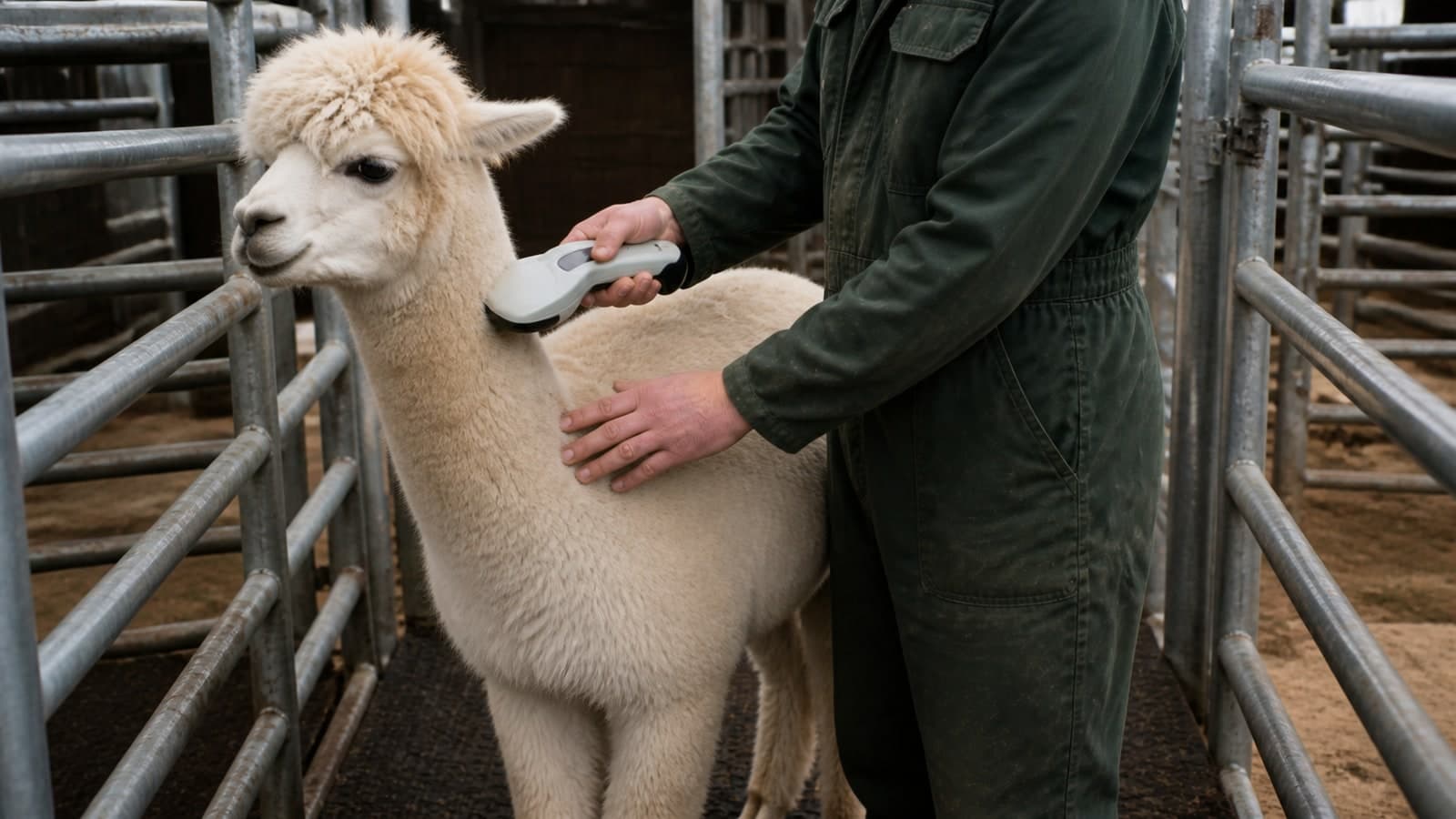
If you keep two alpacas in a back paddock, it is reasonable to wonder whether livestock registration rules really apply to you. In much of Europe, they do: the law usually registers the place where the animals are kept, not just commercial farms. Elsewhere, including the United States and Australia, the answer depends much more on your state or territory.
The process is usually manageable. You register the holding, identify animals where required, and keep enough information to trace arrivals, departures and treatments. The important part is following your own jurisdiction's system rather than borrowing a rule from another country.
Government registration and pedigree registration are different things. A government register supports disease control and traceability. A breed society records lineage and is normally optional. One does not replace the other.
Last reviewed: 31 August 2026. This guide summarises official rules in plain language; it is not legal advice. Disease-control measures and movement rules can change quickly, so confirm an upcoming move with the relevant authority.
The short answer
Read the country section before acting. The table cannot capture regional exceptions, temporary disease controls or the details of a cross-border move.
Four records that are easy to confuse
Different authorities use different names, but alpaca paperwork usually falls into four separate jobs:
- Holding registration tells the authority where animals are kept.
- Animal identification links an individual alpaca to a tag or microchip where the law requires one.
- Holding and movement records show which animals arrived, left, were born or died.
- Medicine records document treatment. Statutory requirements may depend on the animal's legal food-producing status and are not identical in every country.
Not every country asks for all four in the same way. A pedigree certificate, a microchip and a holding number also serve different purposes, so keep the terms separate when speaking to an authority or vet.
United Kingdom
There is no single camelid-registration rule for the whole UK. Check the nation where the animals are kept.
England
The current GOV.UK CPH guidance lists a County Parish Holding number as voluntary for camelids. In other words, you do not need a CPH simply because two alpacas live on your land. You may still need one if you keep another regulated livestock species or take part in an activity or scheme that requires it.
Do not turn that into “alpacas never need official identification or movement paperwork.” Temporary disease controls can create extra duties. For example, England's bluetongue camelid guidance requires individual identification and a licence for specified moves out of a restricted zone. Identification may also be needed for export or tuberculosis testing. Check the live disease status before arranging transport.
Northern Ireland
Northern Ireland is introducing a dedicated traceability system. According to DAERA, every camelid establishment must be registered by 30 September 2026, even if it keeps only a small number. Establishment records also start by that date and must be retained for at least 3 years.
From 4 January 2027, camelids must be identified with an approved device within 9 months of birth or before they leave their birth establishment, whichever comes first. Use the DAERA registration service rather than the England process.
Scotland and Wales have their own administrations. Ask the relevant animal-health authority what holding number, movement document and disease-control rules apply before relying on English guidance.
If an alpaca is legally treated as a food-producing animal, the UK veterinary-medicine guidance requires medicine records to be kept for at least 5 years. Do not assume either that every alpaca falls into that category or that calling it a pet removes it; confirm the status with your vet.
European Union: the shared framework
EU rules sit behind the Italian, German and Austrian systems below. Under the Animal Health Law, Regulation (EU) 2016/429, an operator registers an establishment with the competent authority before starting the activity. Article 102 requires establishment records and sets a minimum retention period of 3 years.
Individual camelid identification comes from Delegated Regulation (EU) 2019/2035 and Implementing Regulation (EU) 2021/520. The standard choices are:
- one conventional ear tag in each ear; or
- one injectable transponder.
Identification is completed at the birth establishment within the period set by the member state, up to a maximum of 9 months, and before the alpaca leaves that establishment. National rules decide which database, authority and workflow you use and may add requirements.
Italy
Start with your local ASL veterinary service. The holding and operator are recorded in the BDN (Banca Dati Nazionale), including hobby holdings. The ASL can tell you who completes each step locally and how you access the national system.
The current Ministry of Health I&R operational manual gives camelid keepers the same two identification options as the EU rules: two conventional ear tags or one injectable transponder. It is therefore not correct to say that every Italian alpaca must be microchipped.
Identification is due within 9 months of birth and before the animal leaves its birth holding. The identified animal is then registered in the BDN within 7 days after the identifier is applied.
Movements are documented and recorded through the current BDN identification-and-registration process. The familiar movement document is generally called Modello 4. Ask the ASL to show you the exact workflow before the first sale or transfer rather than waiting until the transporter arrives.
Germany
Section 45 of the ViehVerkV requires anyone keeping camelids to notify the competent authority and keep a Bestandsregister. There is no hobby-herd exemption in that provision, so contact your local Veterinäramt before the alpacas arrive.
The German register records:
- the number of each camelid species present on 1 January;
- each arrival, with the previous keeper's name and address and the date; and
- each departure, with the recipient's name and address and the date.
Entries must be made promptly. The register may be electronic and is retained for 3 years, calculated under the linked § 25 rules. EU individual-identification rules apply alongside this national holding register, so keep each alpaca's legal tag or transponder code with its own profile even if a local paper form focuses on totals and movements.
Medicine records are a separate question. Section 1 of the THAMNV applies to animals that serve food production and requires the specified medicine records to be kept for at least 5 years from creation. That wording does not justify treating every alpaca as food-producing regardless of its use, nor does “pet” settle the issue by itself. Ask your vet or Veterinäramt how your animals are classified and which medicine record applies.
Your regional Tierseuchenkasse obligations can vary by Bundesland, so check them separately.
Austria
Report the keeping of alpacas to your Bezirksverwaltungsbehörde within 7 days of starting. The data is held in Austria's Verbrauchergesundheitsinformationssystem (VIS), and keepers can also use the VIS registration route. Small and hobby holdings are included.
Camelids are not part of the routine VIS annual survey for pigs, sheep and goats. Registering the holding is still required; it simply does not create that particular annual return.
The EU identification options and deadline apply: two ear tags or one injectable transponder, within the national period of no more than 9 months and before leaving the birth holding. Austria adds an important detail. Under § 36 of the TKZVO 2009, a camelid must have an injectable transponder before official certification, a vaccination ordered under animal-disease rules, or identification ordered by the authority. An ear-tagged animal can therefore still need a transponder before one of those events.
Keep establishment, animal and movement records for at least the EU minimum of 3 years, and confirm any local format with the authority. For the full Austrian workflow, see keeping alpacas in Austria.
Switzerland
Register the holding with your cantonal veterinary office. Starting a holding, a keeper change or closure must be reported to the canton within 3 working days. The holding receives a TVD number and access is managed through the Swiss system, but camelid births, movements and deaths are not reported individually to the TVD in the way cattle events are.
Alpacas born in Switzerland on or after 1 November 2022 must be microchipped within 30 days of birth. The chip is placed on the left side of the neck and its number belongs in the animal inventory and movement paperwork; the individual chip number itself is not reported to the TVD.
Keep an up-to-date animal inventory and the required movement documents. These records are retained for 3 years. Swiss rules also require the person responsible for keeping alpacas or llamas to show suitable competence; the exact training route depends on herd size and experience.
The official starting point is the Federal Food Safety and Veterinary Office's llama and alpaca guidance. Our guide to keeping alpacas in Switzerland explains the registration, microchip, records and welfare steps together.
United States
There is no general federal register for alpaca holdings or individual alpacas. The federal scrapie program does not change that: 9 CFR Part 79 applies to sheep and goats, not camelids.
It is also incorrect to say that the federal Animal Disease Traceability rule automatically requires every alpaca crossing a state line to have official ID and a Certificate of Veterinary Inspection. The definition of “covered livestock” in 9 CFR 86.1 does not include camelids.
The practical work happens at state level. A destination state may require one or more of the following:
- a Certificate of Veterinary Inspection (CVI);
- a state entry permit;
- individual identification;
- disease testing; or
- additional conditions tied to the animal's origin.
Check both the origin and destination state agriculture authorities before the move. USDA's movement-document guidance explains how a CVI works when one is required; it is not a substitute for the destination state's entry rules.
A USDA premises identification number (PIN) or location identifier (LID) is administered through the states. USDA says a PIN or LID is needed to purchase official electronic ID tags, but that does not create a general federal duty to register every alpaca holding.
Australia
Australia does not have one national alpaca rule that can be reduced to “get a PIC and use the same camelid waybill everywhere.” Registration, movement documents and retention periods are administered by the states and territories.
A Property Identification Code (PIC) is commonly required. For example, Victoria requires alpaca keepers to have a PIC, and New South Wales includes camelid properties in its PIC system. Queensland requires the keeper to become a registered biosecurity entity in order to receive a PIC. Check your own jurisdiction rather than using those examples as a national form.
There is currently no nationwide legal NLIS-tag requirement for alpacas. Agriculture Victoria states this directly in its alpaca biosecurity guidance. Voluntary identification or an industry scheme is not the same as a legal national mandate.
Movement paperwork also differs. Queensland requires a movement record for alpacas and both parties retain it for 5 years. Western Australia allows a plain waybill for alpacas and requires copies to be retained for 7 years. Before moving an animal, check the departure, destination and transit rules and use the document each jurisdiction accepts.
What to record in practice
The law does not use one worldwide template. A useful working record nevertheless gives you a strong base from which to complete local forms.
For each animal
- name or management number;
- legal tag or microchip code, where applicable;
- species, sex and date of birth;
- arrival date and source;
- departure or death date and destination; and
- pedigree details if they help your own breeding records.
For each movement
- date;
- animal or number of animals;
- origin and destination holding details;
- seller, buyer or keeper details required locally; and
- the official certificate, permit or movement-document reference.
For health and treatment
- date, animal, product, dose, route and person who administered it;
- reason for treatment and outcome;
- prescribing or attending vet where relevant; and
- the withdrawal period and calculated end date only where one has been supplied and applies.
A practical health history is useful for every alpaca. A statutory medicine register has jurisdiction-specific fields and retention rules, especially where animals are legally food-producing. Confirm those requirements with your vet rather than relying on a generic template.
Germany also asks for a 1 January count per camelid species. That is a German requirement, not a reason to claim every country needs an annual headcount.
For a fuller setup, see how to keep alpaca records and alpaca medication records.
How long to keep records
Use the period attached to the particular record and jurisdiction. Five years is not a safe universal shortcut: some records need less time, and Western Australian waybills need more.
Keep records readable and retrievable for the full applicable period. If two rules cover the same document, follow the longer one. Digital storage may be acceptable, but it does not replace a required submission to an official database or the need to produce the record when asked.
Keeping the admin manageable
A spreadsheet, notebook or herd-management app can organise your working records. Whichever you choose, compare its fields and exports with the current requirements from your authority; software does not register a holding, submit a government movement report or guarantee legal compliance by itself.
AlpacaKeep keeps animal profiles, movements, births, deaths and treatment histories together and makes those records easier to retrieve. Withdrawal dates are calculated only from information you enter, so medicine instructions and legal status still need to come from your vet. If you keep a spreadsheet today, read about moving from spreadsheets.
AlpacaKeep is built and run on a working alpaca farm and is in private beta now for farms in the EU, the UK, Australia and New Zealand, with every feature free for the beta farms. The Free plan for up to 10 animals stays free afterwards. Get early access.
Official sources and further reading
- United Kingdom: England CPH guidance, England bluetongue camelid guidance, Northern Ireland registration changes, and veterinary-medicine record guidance
- European Union: Regulation (EU) 2016/429, Delegated Regulation (EU) 2019/2035, and Implementing Regulation (EU) 2021/520
- Italy: Ministry of Health identification and registration operational manual and camelid registry overview
- Germany: ViehVerkV § 45 and THAMNV § 1
- Austria: VIS camelid-holder information and TKZVO 2009 § 36
- Switzerland: Federal Food Safety and Veterinary Office llama and alpaca guidance
- United States: 9 CFR 86.1, 9 CFR Part 79, and USDA premises identification guidance
- Australia: Agriculture Victoria alpaca biosecurity booklet, Queensland camelid movement guidance, and Western Australia livestock waybill guidance