 AlpacaKeep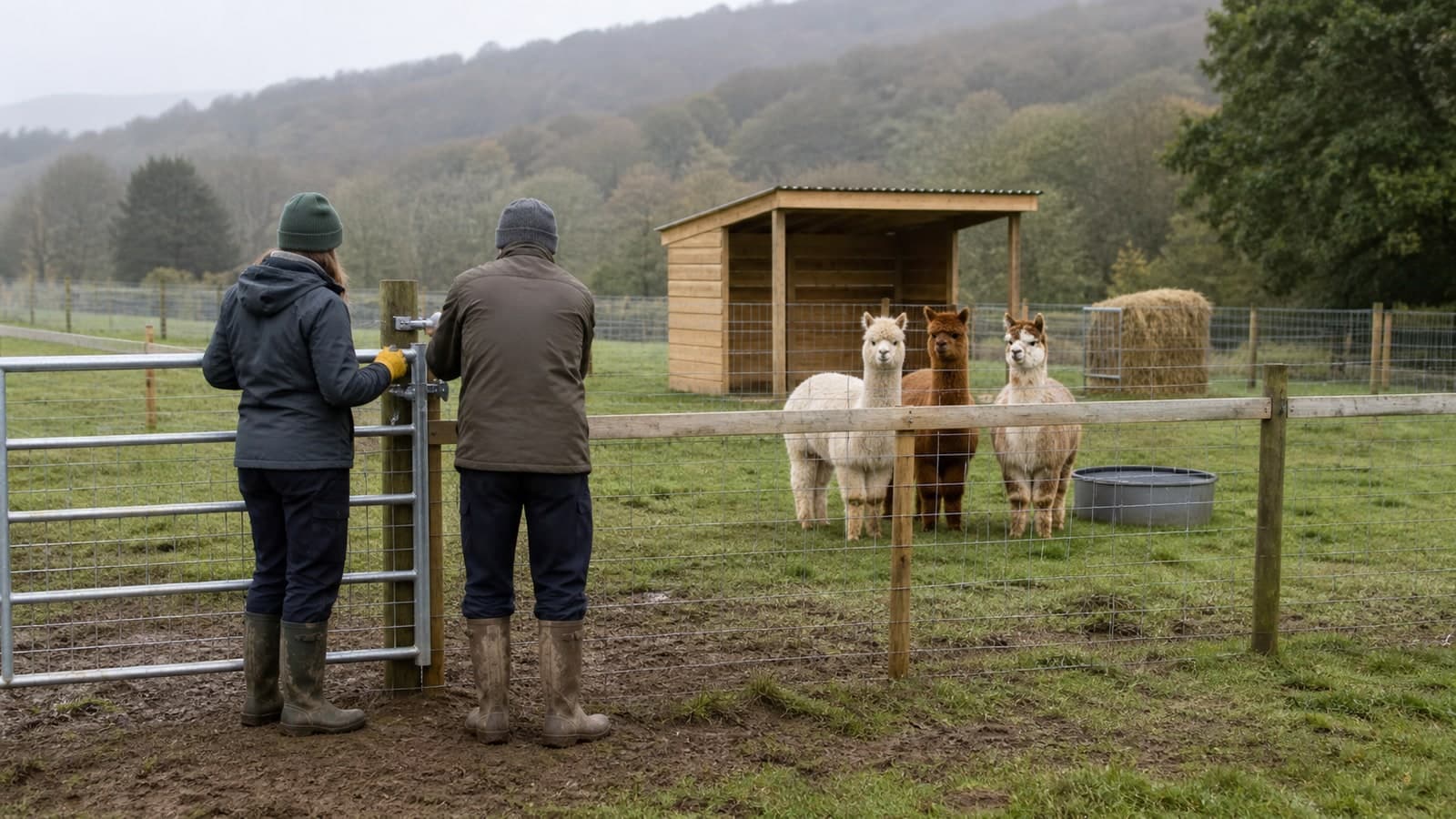
So you're thinking about how to start an alpaca farm. Maybe you've got a bit of land, a love of these gentle animals, and a dream of a calmer life with a herd grazing outside your window. You're in good company, raising alpacas has become one of the most popular ways onto the land for hobby farmers and smallholders alike.
The good news: alpacas are one of the friendlier livestock species to begin with. They're a manageable size, they have a low environmental impact, and they produce a world-class luxury fibre. But they're camelids, not sheep or goats, and they have their own rules. Get the basics right on day one and the rest of your farming journey gets a whole lot smoother.
This guide walks you through the big-picture steps of starting an alpaca farm, from deciding why you want them, to land and shelter, to your first herd, daily care and the paperwork. Along the way we'll point you to deeper guides for the details.
Why Alpacas, and What's Your Purpose?
Before you buy a single animal, get clear on why you want alpacas. Your purpose shapes every decision that follows, from which animals to buy to how much land and money you'll need.
Most new owners fall into one of these camps:
- Fibre: you want to harvest, sell or craft with their soft fleece. This rewards good genetics and careful fibre records.
- Breeding: you want to produce and sell quality stock. The most involved (and potentially rewarding) path.
- Pets and lawn-mowers: you simply love them and want a calm, low-maintenance herd. Geldings are perfect here.
- Trekking and agritourism: you want to walk alpacas, host visits or run a farm-stay. Friendly, well-handled animals matter more than show-ring genetics.
You don't have to pick just one, but knowing your main goal stops you from overspending on elite breeding genetics when really you want three lawn-mowing companions. Wondering whether any of this pays for itself? We tackle that honestly in our guide on whether alpacas are profitable.
How Many Alpacas Do You Need?
Here's the single most important rule for a beginner: never keep just one alpaca. They are deeply social herd animals, and a lone alpaca will suffer severe stress that depresses its immune system and can lead to illness or death.
The minimum is three. Why not two? Because if one dies, you're left with a single isolated animal in a crisis. Three to five is the sweet spot for a first herd, large enough to be stable, small enough to learn on.
For your very first animals, keep them same-sex. A group of geldings (castrated males) or retired females avoids the complex, sometimes aggressive dynamics of a breeding setup. You can never mix intact males and females in one paddock, even castrated males may try to mount females and cause serious injuries.
Land and Space
Alpacas are light on the land. They have soft padded feet rather than hooves, and they snip grass rather than ripping it out by the roots, so they're gentle on pasture compared with horses or cattle.
As a rough guide, good pasture supports around 10 to 15 alpacas per hectare, though that depends on grass quality, rainfall and how well you rotate your grazing. Allow more space where your grazing is poor, and remember you'll still need to feed good-quality hay year-round, especially in winter or during dry spells.
Split your land into at least two paddocks if you can, so you can rotate grazing, rest pasture and separate animals when needed. Rotation also helps break the parasite cycle, which is one of the biggest health challenges in camelids.
Choosing Your First Alpacas
Once you know your purpose and your numbers, it's time to choose animals. For a first herd, prioritise temperament and health over fancy genetics. Healthy, halter-trained, easy-to-handle alpacas will teach you far more than nervous, expensive show stock.
The two fibre types you'll meet are the fluffy, teddy-bear Huacaya and the silky, dreadlocked Suri. For most beginners the Huacaya is the easier, hardier choice. We compare them in detail in our guide to the best alpaca breed for beginners, which also explains why geldings make such a forgiving starter herd.
Wherever possible, buy from a reputable breeder who will mentor you, let you visit, and stand behind their animals' health.
Shelter, Fencing and Pasture Setup
You don't need a fancy barn, but you do need to get a few practical things right before your alpacas arrive.
Shelter
Alpacas are hardy and prefer to be outdoors, but they need somewhere to escape driving rain, wind and summer sun. A simple three-sided shelter (open-fronted field shelter) is ideal, it lets the herd choose to come and go. Allow plenty of room so the whole group can shelter together without crowding.
Fencing
Fencing keeps your alpacas in and, just as importantly, keeps predators like dogs and foxes out. A stock fence around 1.2 to 1.5 metres high is the usual standard. Avoid barbed wire, and make sure the fence sits close to the ground so animals can't squeeze underneath. Many keepers run a hot wire to deter predators.
Water and pasture
Provide clean, fresh water at all times, alpacas drink a surprising amount, especially in summer. Walk your fence lines and check water regularly, and keep an eye on pasture quality so you know when to supplement with hay.
Budgeting at the Operation Level
It's tempting to focus only on the sticker price of an alpaca, but the smart way to plan is at the whole-operation level. Think in three buckets:
- The animals: your starter herd of three to five.
- One-off setup: fencing, shelter, water troughs, a basic handling pen, halters and shearing or vet gear.
- Ongoing running costs: hay and feed, vet and medication, annual shearing, insurance and registration.
Per-animal prices swing hugely depending on age, sex, fibre quality and pedigree, so we keep those numbers in a dedicated guide. For the actual figures, see how much does an alpaca cost. And before you bank on the farm paying for itself, read our honest take on whether alpacas are profitable, the ROI question deserves a clear-eyed answer rather than a quick promise here.
Daily Care and Health
Day to day, alpacas are refreshingly low-maintenance, but they do need a consistent routine. The core jobs are feeding and fresh water, a daily eyes-on health check, regular toenail trims, parasite monitoring, vaccinations, and one non-negotiable: annual shearing.
Shearing isn't optional, it's a welfare requirement. An unshorn alpaca can overheat and die in summer, because they can't shed their dense, insulating fleece on their own. Build a yearly calendar around shearing, vaccinations and parasite checks so nothing slips.
Find a vet who's comfortable with camelids before you bring animals home, and learn the basics of body condition scoring so you can spot a thin animal hiding under all that fleece. Our full alpaca care guide walks through feeding, health checks and the routine in detail.
If You'll Breed
Maybe breeding is your end goal, just not your starting point. That's the right instinct. Get comfortable with daily care, handling and the seasonal calendar first, then layer in breeding once your herd is settled.
Breeding adds a whole dimension: choosing pairings, managing pregnancy, the long gestation, cria watch and the realities of birthing. It's deeply rewarding but it raises the stakes. When you're ready, our alpaca breeding pillar covers how to plan matings, avoid risky genetic crosses, and prepare for a safe birth.
Admin: Registration, ID and Record-Keeping
The least glamorous part of starting an alpaca farm, and the part beginners most often overlook, is the paperwork. Getting this right from day one saves real headaches later.
- Register your holding. Most countries require livestock keepers to register their premises and herd with the relevant agricultural authority before animals arrive. Check your local rules.
- Identify your animals. Microchipping is the standard for alpacas, and it's how you'll track each animal reliably for life.
- Keep records. You'll need to log medications and withdrawal periods, movements on and off the holding, breeding, shearing, weights and health events, both for compliance and for running a tight ship.
This is exactly where a purpose-built tool pays for itself. Spreadsheets and whiteboards buckle fast as a herd grows. AlpacaKeep is being built specifically for camelid farms, to track health, breeding, fibre, finances and compliance in one place. If that sounds useful, join the early access list and start your farm with the records sorted from day one.
Your First Steps
Starting an alpaca farm comes down to a handful of clear decisions: know your purpose, start with at least three same-sex animals, set up secure fencing and simple shelter, budget at the operation level, build a steady care routine, and keep good records from the start. Nail those, lean on your breeder and vet, and you'll give these wonderful animals, and yourself, the best possible start.