 AlpacaKeep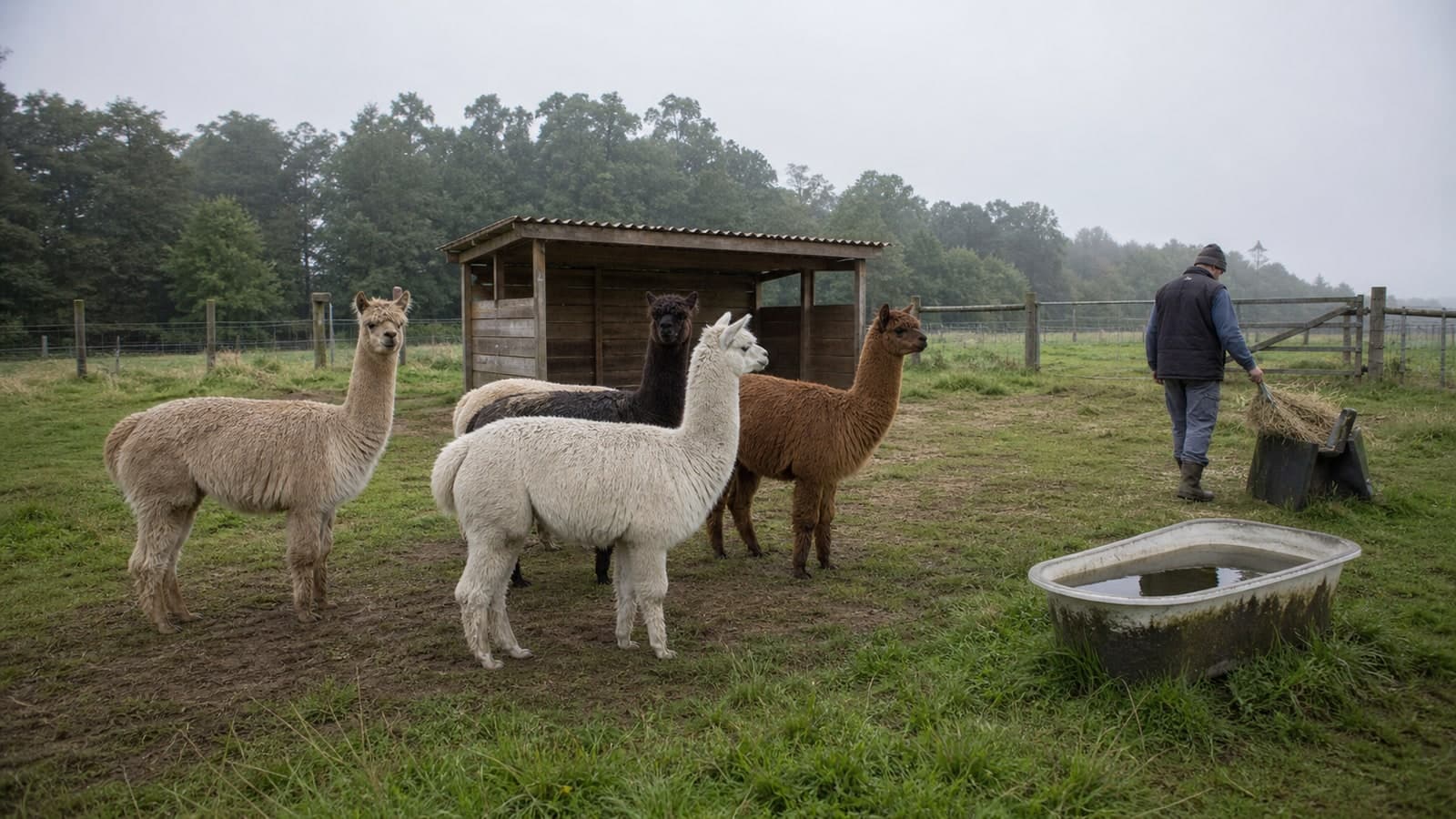
So you've brought home your first alpacas, and now the real question hits: how do you actually keep them healthy and happy? Good alpaca care isn't complicated, but it is specific. Camelids have their own rhythm, and once you learn the routine, looking after a herd becomes a satisfying part of your week rather than a worry.
This guide is your map. We'll walk through the whole picture, from how many animals to keep, to shelter, feeding, fleece, and the health calendar that keeps everything running. Each section gives you the overview, then points you to a detailed guide when you want to go deeper.
Herd Basics: Never Keep Just One
The first rule of alpaca care is the most important one: never keep a single alpaca. They are deeply social herd animals, and isolation causes severe stress that weakens the immune system and can quickly turn fatal.
Always keep a minimum of three. Even two is risky, because if one dies the survivor is left dangerously alone. A starter group of three to five same-sex animals (often docile geldings) is the gold standard.
Give them room to move. As a rough guide, good pasture supports around 10 to 15 alpacas per hectare, ideally divided into a few paddocks so you can rotate grazing, with more space where grazing is poor. Alpacas are gentle on the land: they have soft, padded feet rather than hooves, so they don't chew up your fields the way heavier livestock do.
It also helps to understand how the herd ticks. Alpacas are prey animals, so they are naturally cautious and dislike being grabbed or cornered. They communicate with soft humming, and spitting is mostly reserved for sorting out who gets the food. Handle them calmly and predictably, and most jobs become far easier. One more habit worth building early: keep any new arrival in a separate space for a few weeks before mixing it into the herd, so an unseen illness or parasite load doesn't spread to everyone at once.
Shelter and Fencing
Alpacas are hardy, but they still need a dry, draft-free place to escape weather extremes. A simple three-sided field shelter is enough in most climates, giving them shade in summer and a windbreak in winter. In very hot, humid regions you may need fans, and in harsh winters a fully enclosed barn with deep bedding.
For fencing, think keeping predators out more than keeping alpacas in. They rarely challenge a fence, but dogs and foxes are a real threat. Avoid barbed wire (it tears fleece and skin) and steer clear of square mesh large enough to trap a curious head.
Wherever they live, two things matter every single day: clean, unfrozen water and a way to stay cool. Alpacas don't sweat the way we do, so in summer they rely on shade, a breeze, and the option to wade or splash. A shallow paddling pool or a sprinkler aimed at the belly can be a lifesaver on the worst days.
Feeding and Body Condition
Feeding alpacas is refreshingly simple. The foundation of every diet is good-quality grass and hay plus constant access to clean, fresh water. They're efficient grazers and only eat roughly 1.5 to 2 percent of their body weight a day.
What pasture can't always supply is minerals. Most soils are short on selenium, zinc, and vitamin D, so offer a camelid-specific mineral supplement. Stick to one product made for camelids rather than mixes made for cattle, goats, or horses: camelids need some copper, but stacking supplements can push the total too high. Keep grain to a minimum: alpacas get fat easily, and obesity is as much a welfare problem as being too thin.
Because that thick fleece hides the body, you can't judge weight by eye. Instead, put your hands on each animal once a month and feel along the spine. That's the body condition score method, scored on a 1-to-5 camelid scale, and it's the single most useful health habit you can build. For a quick number you can save, run the figures through our BCS calculator.
Shearing and Fiber Upkeep
Here's a non-negotiable: shear your alpacas once a year, every year, in spring. Annual shearing is a welfare requirement, not a beauty treatment. Alpacas can't shed their dense fleece, so an unshorn animal can overheat and die when summer arrives.
Shearing also gives you a once-a-year chance to lay hands on the whole animal and spot problems hiding under all that fiber. The exact timing depends on your climate, your breed, and your cria due dates. For the full decision framework, see our guide on when to shear alpacas.
Parasite Control
Internal parasites are one of the most common health threats to a herd, but the old advice to deworm on a fixed schedule is outdated and actively breeds drug resistance.
The modern, smarter approach is test, then treat. Run a fecal egg count a few times a year and only deworm the animals (and with the products) that the results call for. This protects your herd, your wallet, and the long-term effectiveness of the medicines. Our deworming schedule guide breaks down how to read the results and build a control plan.
Vaccinations
Alongside parasite control, a simple vaccination program protects against the diseases most likely to kill an alpaca out of nowhere. The cornerstone almost everywhere is the annual clostridial (CD&T) booster, which guards against enterotoxemia and tetanus.
Crias need a primary course to get started, and pregnant dams are often boosted before birth so the cria gets protection through the first milk. The full timing for adults, crias, and pregnant females is laid out in our vaccination schedule guide.
Routine Husbandry
Beyond the big seasonal jobs, a handful of small tasks keep alpacas comfortable year-round:
- Toenail trimming. Alpacas have two toes with nails, not hooves. Trim them every few months so they don't curl and twist the foot. Pasture surface and individual growth rate set the pace.
- Teeth and fighting teeth. Check that the lower teeth meet the dental pad cleanly. Adult males (and some females) grow sharp fighting teeth around age two to three that usually need blunting.
- Body condition checks. The same monthly hands-on score from the feeding section catches a thin or over-fat animal long before it becomes a crisis.
A simple recurring calendar for all of this beats relying on memory, especially as the herd grows.
Crias and Young Stock
A newborn cria brings its own care checklist. In the first hours, the priorities are that it stands and nurses, gets enough of that antibody-rich first milk (colostrum), and has its navel disinfected.
After that, growth is the headline you watch. A healthy cria gains weight steadily, and a stalled or dropping curve is one of the earliest warnings that something is wrong. Our cria growth curve guide shows you the daily-gain numbers to expect and when to step in.
Keep Your Care Routine on Track
Once you've got the rhythm of alpaca care, the hard part isn't knowing what to do, it's remembering to do all of it, for every animal, on time. Shearing dates, fecal tests, vaccine boosters, toenail trims, cria weights: it adds up fast, and a whiteboard or spreadsheet starts to crack as the herd grows.
That's exactly what we built AlpacaKeep for: a platform made for camelid farming that tracks health tasks, medications, withdrawal periods, and weights so nothing slips through. Join the early access list and turn your care routine into something that runs itself.